

If you’ve ever wrestled with a broken chair leg or a cracked skateboard deck, chances are you’ve reached for a bottle with a gorilla on it. But here’s a question fewer people ask: who actually got rich off that bottle? Mark Singer Gorilla Glue net worth is currently estimated somewhere between $300 million and $500 million as of 2025, and the story behind that figure is honestly a lot more interesting than most “celebrity net worth” pieces you’ll stumble across online. It’s not inherited money, and it’s not a lottery ticket. It’s the result of one guy noticing a problem in a furniture workshop and refusing to let it go.

In this article we’re going to break down exactly where that fortune comes from, how it’s structured, and why the numbers floating around the internet are — to be blunt — a lot shakier than most sites let on.
Who Is Mark Singer? A Quick Introduction
Mark Singer is the entrepreneur and former furniture designer credited with bringing Gorilla Glue to North America. He is not to be confused with the journalist of the same name (that mix-up trips up a surprising number of Google searches, so let’s clear it up right away).
Singer’s background wasn’t in chemistry or business school theory — it was hands-on. He worked as an award-winning furniture designer, with pieces that reportedly showed up in places like the Museum of Modern Art. His dad ran a small hobbyist woodshop, and that’s really where Singer’s obsession with materials and construction took root. Funny how these things start, right? A kid messing around in his father’s garage ends up building a company worth over a billion dollars decades later.
Also Read: OT7 Quanny Age Revealed
Also Read: Popcorn Google Doodle
The Origin Story: How a Trip to Indonesia Changed Everything
Mark Singer → discovered → a Danish-made polyurethane adhesive in Indonesia. That single sentence is basically the seed of the entire Gorilla Glue empire.
While designing furniture, Singer kept running into a wall (literally, sort of) with teak wood. Teak is beautiful but notoriously oily and resin-heavy, which means normal glues just don’t hold up well on it. During a trip to Indonesia in the early 1990s, Singer watched local craftsmen using an incredibly tough, moisture-cured polyurethane adhesive to bond teak furniture. It wasn’t epoxy, and it wasn’t anything sold in American hardware stores at the time.
He saw the opportunity immediately and secured exclusive North American distribution rights to the product. That decision — more than any single marketing campaign that came later — is arguably the most important business move of his career.
From Idea to Shelf: The 1994 Launch
The original Gorilla Glue hit the market in 1994, and it didn’t take long for it to earn a reputation. It bonded wood, stone, metal, ceramic, foam, and glass, and it had this weird expanding property while curing that created a foamy “squeeze-out.” Sounds messy (and it kind of is), but that quirky trait actually became part of the product’s identity. People talked about it. That’s free marketing you honestly can’t buy.
Building “The Toughest Brand on Planet Earth”
Product quality alone rarely builds a billion-dollar company — branding does the heavy lifting. Singer clearly understood this. The gorilla mascot, paired with the slogan “For the Toughest Jobs on Planet Earth,” gave the product a personality that stuck in people’s heads. It wasn’t subtle, but it worked.
Strong branding → creates → consumer trust and recall, and that trust is exactly what let Gorilla Glue expand into new product categories without losing customer loyalty. Over the years the brand rolled out:
- Gorilla Super Glue (fast-drying formula)
- Gorilla Tape (marketed for extreme durability)
- Gorilla Construction Adhesive
- Various epoxies, sealants, and specialty products
- O’Keeffe’s Skincare (acquired in 2018, a bit of an unexpected pivot into skincare)
By the mid-2000s the brand had strong U.S. retail presence, and by 2015 it had genuinely gone global. Not bad for a company that started with one guy importing glue from Indonesia.
The 1999 Sale: Selling the Company Without Selling Out
Here’s where things get financially interesting. In 1999, Mark Singer sold The Gorilla Glue Company to the Ragland family. On paper that sounds like the end of the story — guy sells company, cashes out, moves on. But that’s not quite what happened.
Singer retained a significant ownership stake in the business even after the sale. This is honestly the single smartest financial decision in his whole career, arguably smarter than the original discovery itself. Selling operational control while keeping equity meant he could step back from day-to-day management yet still benefit financially every single year the company grew.
Today, brothers Pete and Nick Ragland serve as co-presidents and run the company’s daily operations. Singer isn’t in the boardroom making calls anymore, but he’s still cashing in on the brand’s success.
Also Read: Albert Omstead: The Life, Career, and Legacy of a Cobra Kai Crew Member
Also Read: Pedro Paulo Executive Coaching
Deconstructing Mark Singer’s Net Worth: Where the Money Actually Comes From
So let’s get into the numbers, and I’ll be upfront — a lot of the specific percentages you see quoted around the web (including on other sites) are estimates, not audited figures. Private companies don’t publish this stuff. Still, based on available reporting, here’s a rough breakdown of how his wealth is believed to be distributed.
| Wealth Source | Estimated Contribution | Approx. Value |
| Gorilla Glue Company equity | 60-75% | $375+ million |
| Giati Designs & other ventures | ~15% | $45-75 million |
| Investment portfolio & real estate | ~10-15% | $30-75 million |
| Royalties & licensing | ~5-10% | $15-50 million |
The Gorilla Glue Company → generates → the majority of Singer’s net worth, largely because the company itself is now valued north of $1 billion, with annual revenue reportedly exceeding $500 million. Products are sold in over 70 countries, and the workforce sits somewhere between 500 and 1,000 employees. That kind of scale, combined with a retained equity stake, is what turns “successful entrepreneur” into “hundred-millionaire.”
Beyond Glue: Giati Designs and Other Ventures
Singer didn’t just sit back and collect dividends. He went back to his roots with Giati Designs, a luxury teak furniture company that ties directly back to his original career and, honestly, the very material that led him to discover Gorilla Glue in the first place. Kind of a nice full-circle moment if you think about it.
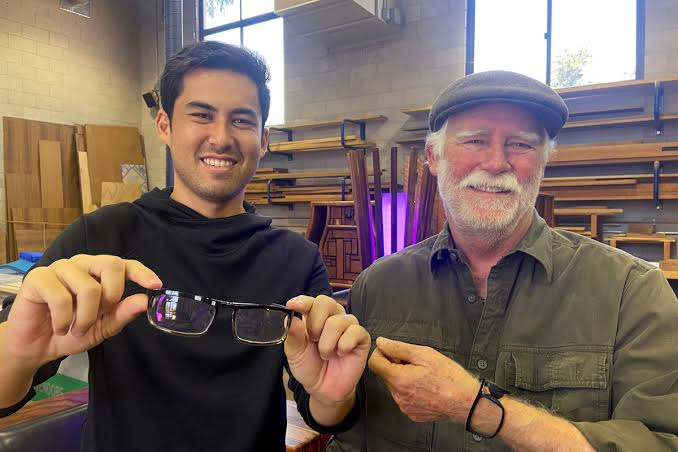
More recently, in 2023, Singer appeared on Shark Tank alongside his son Kenzo Singer to pitch EyeWris, an eyewear venture. Whether or not it becomes a major revenue driver remains to be seen, but it shows Singer still has the entrepreneurial itch even decades after his first big win.
He’s also reportedly diversified into real estate holdings and technology startup investments, which act as a hedge against any single business underperforming. It’s a pretty textbook wealth-preservation strategy for someone who made most of their money from one core asset.
How Reliable Are These Net Worth Figures, Really?
This is the part most articles gloss over, and it’s worth addressing directly because, frankly, it matters.
Net worth estimates for private company stakeholders are almost never based on hard data. The Gorilla Glue Company is privately held, which means there’s no SEC filing, no public earnings call, and no legal requirement to disclose ownership percentages or personal wealth. So where do the “$300-500 million” and “60-75% ownership” figures actually come from?
In most cases, sites use a mix of:
- Industry revenue multiples — estimating company valuation based on comparable adhesive/consumer goods businesses and applying typical revenue-to-valuation ratios.
- Public statements and interviews — occasional comments from Singer or company executives about growth or market position.
- Educated guesswork — extrapolating from the 1999 sale terms (which were never fully disclosed) and assumed minority-stake retention.
None of this is necessarily wrong, but it’s not verified either. When you see a confident-sounding infographic breaking Singer’s wealth into precise percentages like “15% from Giati Designs,” treat that as an informed estimate, not an audited financial statement. Mark Singer’s exact ownership percentage in Gorilla Glue post-1999 has never been publicly confirmed, and that’s a pretty significant gap in the story that most competing articles just skip over entirely.
Mark Singer’s Business Playbook: Lessons From His Success
If you strip away the specific dollar figures, there’s a genuinely useful entrepreneurial blueprint here. A few of the decisions that stand out:
- Identifying an underserved niche rather than trying to compete in a crowded market
- Securing exclusive distribution rights before a product had any brand recognition
- Investing heavily in brand identity rather than treating the product as a commodity
- Retaining equity during an exit instead of taking a full cash-out
- Diversifying income streams so no single business controls his entire financial future
None of these are groundbreaking concepts on their own, but the way Singer combined them is what separates a modestly successful small business owner from someone sitting on a nine-figure fortune.
Philanthropy and What’s Next
Singer keeps a pretty low public profile personally, but he’s channeled some of his wealth through The Gorilla Glue Foundation, which focuses on education, healthcare, and environmental sustainability initiatives. It’s not something he talks about loudly, which honestly stands out a bit in an era where a lot of wealthy entrepreneurs turn philanthropy into a PR campaign.
Looking forward, the trajectory seems pretty stable. The Gorilla Glue Company continues expanding its product catalog, EyeWris is still an active project with his son, and his investment portfolio provides a cushion regardless of how any single venture performs.
Frequently Asked Questions
Who owns The Gorilla Glue Company today? The Ragland family owns and operates the company, with Pete and Nick Ragland serving as co-presidents since the 1999 acquisition. Mark Singer, however, retained a significant (though publicly undisclosed) ownership stake, which continues to be a major source of his personal wealth.
How much is The Gorilla Glue Company worth? Because it’s privately held, exact figures aren’t public, but industry estimates put the company’s valuation at over $1 billion, based on its global sales, product line breadth, and market leadership in the adhesive space.
Did Mark Singer invent Gorilla Glue? Not exactly — he discovered an existing Danish-made polyurethane adhesive being used in Indonesia and secured the rights to distribute it in North America. He’s more accurately described as the founder and commercializer rather than the original inventor.
What other businesses does Mark Singer run? Beyond Gorilla Glue, Singer runs Giati Designs, a luxury teak furniture company, and co-founded EyeWris, an eyewear brand, with his son Kenzo. He also holds real estate and technology investments as part of a broader diversification strategy.