

You’ve probably seen that grinning macaque staring straight into your soul on TikTok, and honestly, you’re not alone if you didn’t know what to call it at first. The rizz monkey is one of those memes that seems to come out of nowhere and then suddenly it’s everywhere — your FYP, your group chats, even printed on coffee mugs. This article breaks down where it came from, why it stuck around, and what it actually says about how we communicate online now.
Let’s get into it.
What Is the Rizz Monkey, Exactly?
In short: the rizz monkey is a viral meme built around footage of a smiling black macaque, used to represent digital charisma and flirting confidence. That’s the one-sentence version, but the meme itself is a lot richer than that.
The monkey looks dead into the camera with this weirdly knowing smile, and somehow that single expression became shorthand for “this person (or animal) has got it.” People started using the clip as a stand-in for confidence, swagger, and that hard-to-define quality Gen Z calls rizz. It’s silly on the surface, sure, but the meme taps into something real — our collective obsession with charm in an age where most flirting happens through a screen.
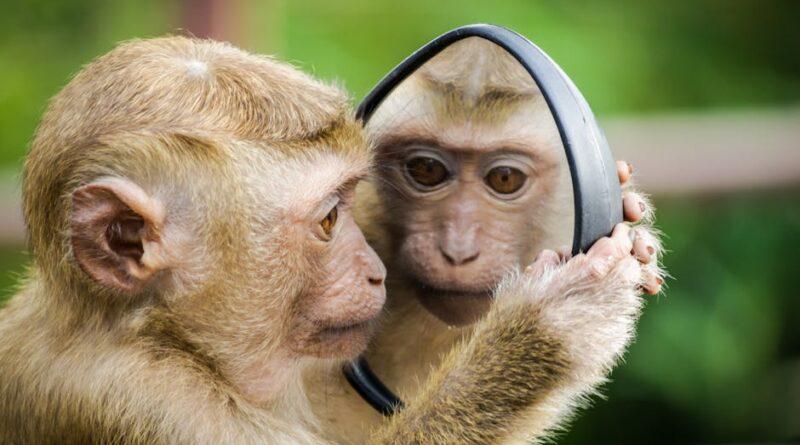
What’s interesting is that the meme functions almost like a mirror. Viewers project their own idea of confidence onto the monkey’s stare, which is part of why it spread so fast across such different online communities — gamers, dating TikTok, crypto bros, all of em found their own use for it.
The Etymology of “Rizz”
Rizz is short for charisma, and it started life as New York street slang before Gen Z picked it up and ran with it. Having rizz doesn’t just mean being likeable in general — it specifically refers to skill in romantic or flirtatious situations. Think of it as “game,” but rebranded for a TikTok generation.
The word blew up thanks to influencers and streamers using it to describe dating success (or failure — “zero rizz” became its own insult). When this slang term collided with the smiling macaque clip, the two ideas merged into something bigger than either alone. The rizz monkey suggests that charisma might be primal, almost instinctive — not something you learn in a self-help book, but something you either have or you don’t.
Rizz Monkey vs. Other Primate Memes
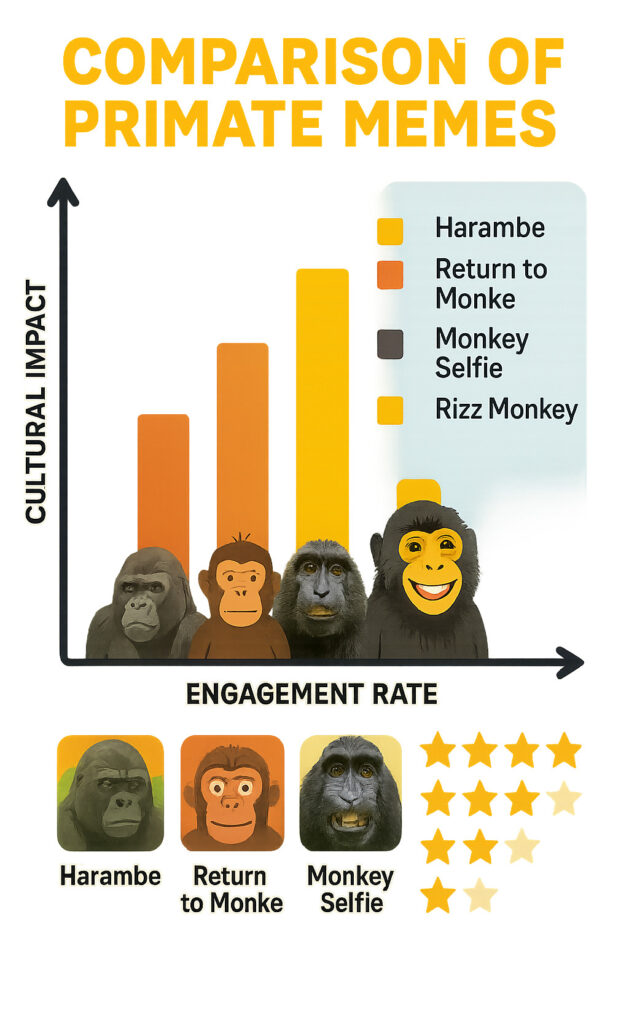
Primate memes are basically their own genre of internet culture at this point, and the rizz monkey has carved out a distinct lane. Here’s a quick comparison of how it stacks up against its predecessors:
| Meme | Tone | Core Message |
|---|---|---|
| Harambe | Mournful, ironic | Collective grief turned into dark humor |
| Return to Monke | Nihilistic, escapist | Rejecting modern complexity |
| Monkey Selfie | Legal/absurdist | Copyright confusion, animal rights debate |
| Rizz Monkey | Celebratory, playful | Confidence and flirtation |
Unlike Harambe, which carried a weirdly somber undertone even at its most ironic, the rizz monkey is purely a good-vibes meme. And unlike Return to Monke, which is all about escaping modern life, the rizz monkey fully embraces internet culture and leans into it. What really sets it apart though is the interactivity — the monkey seems to be actively trying to charm you, not just sitting there being memed at. That participatory quality is a big reason the format proved so flexible.
The Origin Story: From Forgotten Footage to 50 Million Views
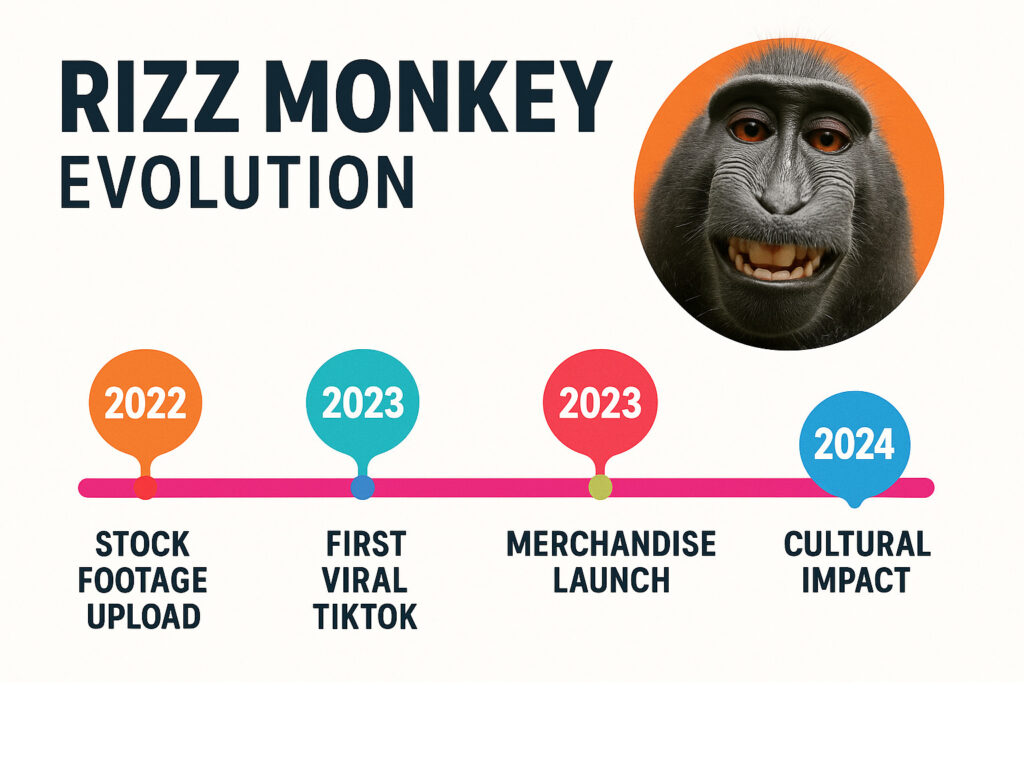
So how did a random nature clip become a full-blown internet sensation? The timeline is honestly kind of wild.
Videographer Ami Bornstein → uploaded → the original 4K macaque footage to YouTube in May 2022. For almost a year, nobody cared. It sat there quietly collecting a modest 5,400 views, just another piece of stock wildlife content gathering digital dust.
Then things shifted in February 2023. Someone found the clip and posted it to Instagram as a meme, and it picked up around 11,400 views and 4,100 likes over the following two months — not viral by any stretch, but enough of a spark to catch the right eyes.
TikTok user @111_monkey → discovered and remixed → the footage into the viral breakthrough video. By dropping the monkey into a disco-style scene with flashing lights and pairing it with trending audio, @111_monkey unlocked something the original footage never had on its own. The video exploded, racking up roughly 51.2 million plays and 8.3 million likes in about two months. That’s the moment the rizz monkey stopped being a nature clip and became a cultural artifact.
You may also like to read: Ari Fletcher Age
You may also like to read: Peter Orszag Bald
Key Milestones That Cemented the Format
A few specific moments really cemented the meme’s staying power:
- April 13, 2023 — CapCut released the official “Monkey with rizz” greenscreen template, which basically handed out viral-content creation kits to anyone with the app. Over 7,200 videos used it within just two weeks.
- @arabian.monkey’s Omegle remix pulled in about 1.5 million plays and nearly 170,000 likes in a month, proving the format worked for video-chat-style comedy too.
- A viral Overwatch 2 iteration showed the meme could cross into gaming culture, gaining roughly 49,000 plays in only five days.
Each of these moments pushed the meme into a new subculture, which is honestly a big part of why it didn’t just die out after a week like most TikTok trends do.
How the Audio Made It Stick: “No Guidance” and Beyond
The “No Guidance” remix (Chris Brown) → reinforced → the meme’s flirtatious, confident energy. Sped up and heavily edited, the track gave the visuals an urgent, almost hypnotic quality that matched the monkey’s stare perfectly.
This pairing wasn’t an accident either — TikTok’s algorithm weighs audio recognition pretty heavily, so once “No Guidance” became attached to the rizz monkey format, videos using that sound got an algorithmic boost. It’s a good little case study in how audio-visual pairing can make or break a meme’s virality on the platform.
Anatomy of the Meme: Formats and Variations
Part of what makes the rizz monkey so durable as a meme format is just how flexible it is. The core gag — that confident, direct stare — works in basically any context you drop it into.
Some of the most common sub-formats include:
- Greenscreen overlays, where creators place the monkey into random backgrounds — restaurants, nightclubs, even Zoom calls
- POV captions, like “POV: you’re about to get rizz’d,” which lean into the intimacy of the monkey looking straight at the viewer
- Duet and split-screen reactions, building a whole ecosystem of response content
- 7.5-second GIF loops, which somehow make the monkey’s confidence feel even more relentless
- Omegle-style video call skits, playing on the awkwardness of online dating culture
- Gaming crossover clips, where the monkey represents skill or a clutch play
Reaction stickers are probably the most low-key use case, letting people signal romantic interest or just say “this person has rizz” without typing anything at all.
DIY: How People Actually Make Rizz Monkey Content
For anyone curious about making their own, the process isn’t complicated. CapCut’s “Monkey with rizz” template → handles → most of the technical work, including greenscreen keying and timing, right out of the box.
Roughly, the process looks like this:
- Grab the CapCut template (or source the greenscreen footage separately)
- Choose your background scenario — restaurant, party, gaming clip, whatever fits your bit
- Pick your audio — “No Guidance” remains the classic, though trending sounds work too
- Add POV-style captions for engagement
- Post and let TikTok’s algorithm do the rest
Nothing groundbreaking, but that low barrier to entry is exactly why so many people jumped in.
You may also like to read: Christian Stracke Net Worth
You may also like to read: Google Block Breaker
Cultural Impact: Merch, Crypto, and AI Tools
By 2024, the rizz monkey had grown way past meme status into something closer to a small economy. Rizz Monkey virality → drove → real commercial products, including merch, a crypto token, and AI-powered tools.
Merchandise is probably the most visible example — mugs, t-shirts, phone cases, all riding on the monkey’s face. One reviewer apparently loved their mug so much they said it’d “be written into their will,” which is either very funny or slightly concerning depending on how you look at it.
Then there’s the $RZZMNKY cryptocurrency token, an attempt to literally monetize the concept of charisma. It’s built a decent social presence off the back of the meme’s existing community, though (more on this below) it comes with real risks worth understanding before anyone gets involved financially.
On the tech side, platforms like AI4Chat launched a “Rizz Response Generator,” an AI tool designed to help people craft charismatic replies when they’re struggling to flirt. It reportedly supports over 75 languages, which is a genuinely interesting example of a meme concept getting absorbed into practical (if a little goofy) AI tooling.
A Closer Look at the AI Tools and What They Actually Do
Most competitor coverage mentions the Rizz Response Generator in passing without explaining what it actually does — so let’s fix that.
Tools like this typically work by taking a conversation snippet or a description of the situation you’re in, then generating a suggested reply calibrated for tone — playful, bold, sincere, whatever the user selects. The AI draws on large language patterns trained on conversational data to produce something that sounds natural rather than robotic. The appeal is obvious: social anxiety around flirting is real, and having a tool suggest an opening line takes some pressure off.
That said, it’s worth being a little skeptical here. These generators can produce generic, copy-paste-sounding lines that don’t reflect a real personality, and over-reliance on them arguably works against the whole point of “rizz” — which is supposed to be a natural, personal quality, not a scripted output. There’s also very little independent, published data on accuracy or user satisfaction rates for these tools, so treat glowing marketing claims with a healthy dose of caution.
The $RZZMNKY Token: What We Actually Know
The crypto side deserves the same scrutiny. Meme coins tied to viral trends have a well-documented history of pump-and-dump behavior, where early holders and creators cash out once hype (and price) peaks, leaving latecomers holding a token that’s crashed in value. $RZZMNKY hasn’t been independently audited in any widely reported way, and like most meme tokens, its value is driven almost entirely by attention and sentiment rather than any underlying utility or product.
If you’re even considering putting money into it, the standard crypto advice applies: only risk what you can afford to lose, research the contract and liquidity pool before buying, and treat any promises of guaranteed returns as a major red flag.
Controversies and Criticisms
Not everybody’s charmed by this whole phenomenon, and it’s worth being upfront about the pushback.
- Wildlife ethics concerns — Some conservationists and animal welfare advocates have raised questions about turning wildlife footage into entertainment content, arguing it can trivialize animals or encourage viewers to anthropomorphize wild species in ways that aren’t great for conservation messaging. The macaque, after all, didn’t consent to becoming a symbol of internet flirting — it’s just an animal being an animal, and critics argue the meme’s framing (assigning it “intent” to charm viewers) blurs an important line between wildlife and entertainment media.
- Over-sexualized humor — Some rizz monkey content skews more suggestive than the family-friendly original clip, which has drawn criticism, particularly when it pops up in professional or otherwise inappropriate contexts.
- Meme fatigue — Like literally every viral trend, overexposure risks audience burnout. The more a format gets recycled, the less impact it has.
- Financial risk from crypto ties — As covered above, the $RZZMNKY token’s meme-coin structure raises legitimate scam and volatility concerns.
Where Rizz Monkey Fits in 2024–2025 Internet Culture
The rizz monkey lines up with a bigger trend of confidence-based meme formats, including things like the lightskin stare and similar “charisma as content” trends. It also reflects the rise of the creator generalist — influencers who work across platforms and need adaptable, remixable formats to stay relevant everywhere at once.
More broadly, this meme is a decent case study in how fast internet culture now moves from pure entertainment to commercial opportunity. What started as forgotten stock footage turned into merch, crypto, and AI product integration in under two years. That speed is genuinely new, and it says a lot about how viral moments get captured and monetized today compared to, say, a decade ago.
FAQ: Common Questions About Rizz Monkey
What does “rizz monkey” mean in one sentence? It’s a viral meme featuring a smiling macaque that represents digital charisma and flirting confidence, used across social platforms to signal that someone (or something) has serious charm.
Who made the original rizz monkey video viral? TikTok creator @111_monkey turned the dormant stock footage into a viral hit in early 2023, though the original clip was shot and uploaded by videographer Ami Bornstein back in May 2022.
Is the rizz monkey meme still relevant? Yes, though it’s evolved past pure meme status. Ongoing merch sales, the $RZZMNKY token, and AI tools like the Rizz Response Generator show it’s become a small but sustained corner of internet culture.
Is it safe to invest in the $RZZMNKY crypto token? Not necessarily. Meme coins tied to viral trends carry high volatility and pump-and-dump risk. Anyone considering it should research thoroughly and only invest what they’re fully prepared to lose.
Final Thoughts
At the end of the day, the rizz monkey is a pretty perfect example of how modern internet culture actually works — a random piece of stock footage, forgotten for almost a year, turned into a multi-platform phenomenon touching merch, crypto, and AI, all because one creator saw potential nobody else did. Whether it sticks around for another year or fades into “remember when” territory, it’s already taught us something real about how confidence, humor, and commerce collide online.