

If you’ve ever typed “5starsstocks.com income stocks” into a search bar at 11pm wondering if there’s an easier way to build wealth without staring at charts all day, you’re honestly not alone. A lot of investors are tired of the noise — the hot tips, the meme stock chaos, the constant “buy now or miss out” energy that floods social media. What they actually want is something simpler: stocks that pay them, reliably, month after month, year after year. That’s exactly where income stocks come into the picture, and it’s exactly what 5starsstocks.com tries to help people find. In this guide we’re gonna break down what income stocks really are, how the platform approaches them, and where you can go deeper if you want more than just the surface-level stuff.

What Are Income Stocks, Really?
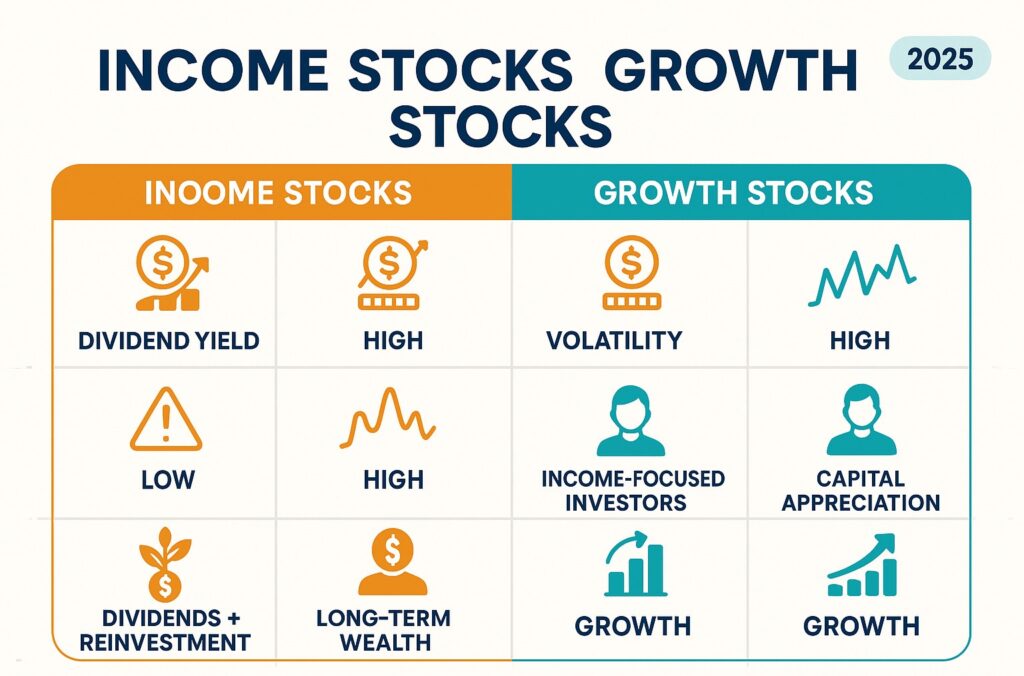
Income stocks are shares in companies that consistently generate stable cash flow and return a chunk of that cash back to shareholders, usually through dividends. Unlike growth stocks, which reinvest profits to expand fast, income stocks tend to belong to mature businesses — think utilities, consumer staples, telecoms — that don’t need to grow aggressively because they already dominate their market.
The appeal is simple: Income Stocks → provide → Stable Cash Flow, and that cash flow is what makes them so attractive to a specific type of investor (more on that below). These companies aren’t trying to be the next big disruptor, they’re trying to keep the lights on and keep paying you every quarter, which honestly is underrated in a market that’s obsessed with 10x returns.
How 5starsstocks.com Approaches Income Stocks
5starsstocks.com isn’t just throwing random tickers at a wall to see what sticks. According to the platform’s own methodology, 5starsstocks.com → analyzes → fundamentals, trends, and sector performance before it ever recommends a stock to users. That means looking at balance sheets, historic earnings consistency, and how a company behaves across different market cycles — not just chasing whatever’s trending that week.
For income stocks specifically, this research-first approach matters a lot. A company can look “safe” on the surface (steady dividend, boring business) but still be masking declining fundamentals underneath. So the platform’s job, in theory, is to filter out the pretenders and highlight companies with real staying power.
Read More: Jack Hibbs Net Worth 2026
Read More: Nate Foy Wife
Income Stocks vs. Dividend Stocks: What’s the Difference?
Here’s where a lot of people get confused, and honestly the terms do get thrown around interchangeably a lot, even by finance sites that should know better. While both categories overlap, they’re not identical twins.
| Feature | Dividend Stocks | Income Stocks |
|---|---|---|
| Cash Flow | Regular payouts, often growing | Stable income streams, prioritizing consistency |
| Risk Level | Moderate | Low to moderate |
| Ideal For | Long-term holders building wealth | Retired investors needing predictable cash |
The key semantic relationship here is: Dividend Stocks → differ from → Income Stocks, mainly in intent. Dividend stocks are often chosen for their payout growth potential — companies that keep raising their dividend year after year. Income stocks are chosen more for reliability and predictability of that cash, even if the payout itself doesn’t grow much. If you’re the kind of investor who just wants to know “will this check show up next quarter,” income stocks are probably your lane.
Who Should Actually Be Using Income Stocks?
This one’s pretty straightforward once you think about it. Low-to-moderate risk profiles attract retired and conservative investors, and that’s basically the target demographic for this whole category. If you’re:
- Nearing or already in retirement and need predictable cash to cover living expenses
- Someone who prefers stability over chasing the next big growth story
- Risk-averse and doesn’t want to watch your portfolio swing 20% in a month
- Looking to supplement a pension or Social Security with extra monthly or quarterly income
…then income stocks deserve a real spot in your portfolio, not just a passing mention.
That said, younger investors sometimes add a small income stock allocation too, just to balance out riskier growth bets elsewhere. It’s not exclusively a “retiree only” club, it’s just where it makes the most sense.
Sector Insights: Where Income Stocks Tend to Live
Not every sector produces good income stocks, and this is something the platform tries to break down through its sector-wise analysis. Some sectors are naturally more defensive and cash-generative than others.
Healthcare companies, for instance, tend to have stable demand regardless of economic conditions (people need medicine whether the economy’s booming or not), which makes them a common home for income-oriented picks. Defense and military stocks also show up here a lot, largely because government contracts create a level of revenue predictability that’s hard to find elsewhere — defense spending doesn’t really dry up even in recessions.
On the flip side, AI and technology-driven firms, while exciting for growth, usually aren’t where you’ll find classic income stocks. These companies typically reinvest profits into R&D rather than paying them out, so if income is your goal, tech is probably not your first stop (though there’s exceptions, obviously).
Building a Portfolio: Sector Diversification Matters
Here’s a semantic truth that a lot of beginner investors overlook: Sector diversification → enables → portfolio balance. Putting all your income-stock eggs in one sector (say, only utilities) exposes you to sector-specific risk that a diversified approach would’ve protected against.
A reasonably balanced income-focused portfolio might spread across healthcare, utilities, consumer staples, and maybe a bit of defense exposure, rather than betting everything on one industry’s fortunes. It’s not rocket science, but it’s surprising how often people skip this basic step because one sector “feels safe.”
Read More: Is Chanley Painter Married?
Read More: XXXXXXXXL Size CXX Clothing
The Topical Gap: What Most Guides Don’t Tell You About Income Stocks
Most articles covering 5starsstocks.com income stocks (and honestly, most finance content in general) stop at the surface — “these are stable companies that pay dividends” — without ever getting into the metrics or mechanics that actually determine whether an income stock is good or just looks good. Let’s fix that.
The Metrics That Actually Matter
If you’re evaluating an income stock yourself, or trying to understand why a platform recommends one, here’s what should be on your checklist:
- Payout ratio — this tells you what percentage of earnings is being paid out as dividends. A payout ratio above 80-90% consistently can be a red flag, since it leaves little room for error if earnings dip even slightly.
- Dividend yield vs. yield trap — a suspiciously high yield (say, 9-10%+) often signals the market expects a dividend cut, not that you found a hidden gem. Yield alone is a pretty misleading metric on its own.
- Free cash flow coverage — does the company’s actual cash generation cover the dividend comfortably, or is it borrowing/depleting reserves to keep paying? This matters way more than earnings-based metrics alone.
- Dividend growth history — companies with 10, 20, even 50+ years of consecutive dividend increases (sometimes called Dividend Aristocrats or Dividend Kings) tend to demonstrate a level of discipline that newer income stocks simply haven’t proven yet.
Tax Treatment and Account Placement
Here’s another piece that gets glossed over constantly: where you hold income stocks matters almost as much as which ones you pick. Dividend income is often taxed differently depending on whether it’s classified as “qualified” or “ordinary,” and holding high-yield income stocks in a tax-advantaged account (like an IRA, where applicable) can meaningfully change your after-tax return compared to holding the same stock in a regular taxable brokerage account.
Income stocks also aren’t the only game in town for cash-flow investing — REITs (Real Estate Investment Trusts) and certain bond instruments serve a similar purpose but come with their own tax quirks and risk profiles. A well-rounded income strategy often blends stocks with these other instruments rather than relying purely on equities.
Pros and Cons of Using a Platform Like 5starsstocks.com for Income Stocks
No platform is perfect, and it’s worth being honest about that instead of just hyping things up.
Pros:
- Simplifies research for beginners who don’t wanna dig through 10-K filings themselves
- Organizes stocks into clear categories (income, dividend, blue chip, value, passive)
- Sector-based breakdowns help with diversification planning
- Focuses on long-term thinking rather than short-term speculation
Cons:
- Doesn’t replace the deeper due diligence (payout ratios, FCF coverage) covered above
- May not suit aggressive traders looking for short-term plays
- No guarantee of returns — no platform can promise that, and be skeptical of anything that does
- Requires the investor to still apply their own judgment before buying
Final Thoughts
At the end of the day, income stocks represent one of the oldest, most tested strategies in investing: get paid to hold good businesses. Platforms like 5starsstocks.com can help point you toward candidates worth researching, especially if you’re newer to this and don’t know where to start looking. But the real edge comes from understanding what’s under the hood — payout ratios, free cash flow, tax placement — rather than just trusting a label like “income stock” at face value. Do the extra step, and your portfolio (and future retired self) will probably thank you for it.
Frequently Asked Questions
Q1: What makes a stock an “income stock” instead of just a dividend stock? Income stocks prioritize consistent, stable cash flow over payout growth. Dividend stocks may still be growing their payouts aggressively, while income stocks focus more on predictability, making them popular among retirees and conservative investors seeking steady cash flow.
Q2: Are income stocks safe from market downturns? No investment is fully “safe,” but income stocks from defensive sectors like healthcare and utilities tend to hold up better during downturns since demand for their products/services stays relatively constant, though prices can still fluctuate with the broader market.
Q3: How do I know if a dividend yield is too good to be true? If a yield looks unusually high (often 9% or more) compared to industry peers, it may signal the market expects a dividend cut. Always check payout ratio and free cash flow coverage before assuming a high yield is a good deal.
Q4: Can beginners use platforms like 5starsstocks.com to pick income stocks? Yes, these platforms are designed to simplify research for beginners through clear categories and sector breakdowns. That said, beginners should still learn basic metrics like payout ratio and dividend history rather than relying solely on any single platform’s recommendations.