

Most people can hum the theme to Mister Rogers’ Neighborhood without even thinking about it. Fred Rogers shaped an entire generation’s understanding of empathy, kindness, and self-worth. But what about the people closest to him — the ones who lived those lessons every single day, not on television, but at the dinner table? James Byrd Rogers, Fred’s eldest son, is one of the least-discussed yet most fascinating figures connected to America’s most beloved children’s television host. He’s proof that a legacy doesn’t always announce itself loudly.
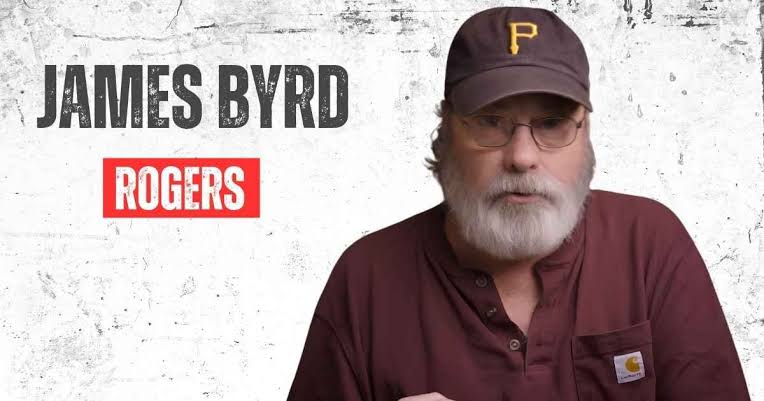
Who Is James Byrd Rogers?
James Byrd Rogers is the eldest son of Fred Rogers and Sara Joanne Byrd Rogers, born into a family that would eventually become a genuine American cultural phenomenon. He grew up in Pittsburgh, Pennsylvania — the same city where his father built the world of Mister Rogers’ Neighborhood — and has spent most of his adult life deliberately away from the public spotlight that followed his father everywhere.
Unlike many celebrity children who either lean into their parent’s fame or publicly rebel against it, James took a quieter, more considered path. He’s not a television personality, he doesn’t court media attention, and he rarely makes public appearances. And somehow, that restraint says everything about who he is and how he was raised.
Growing Up Rogers: A Childhood Built on Empathy and Emotional Honesty
James Byrd Rogers was raised in a household where emotional honesty wasn’t just encouraged — it was the foundation of daily life. Fred Rogers believed deeply in the inherent worth of every individual, and that philosophy wasn’t something he saved exclusively for the camera. It lived in the Rogers home too.
His mother, Joanne Rogers (born Sara Joanne Byrd), was equally central to how the family was shaped. She married Fred in 1952, and together they built a home in Pittsburgh that prioritized compassion, humility, and respect for each child’s individual identity. James, named after Fred’s own father, was the couple’s first child, and by all accounts, he and his younger brother John Rogers were raised with a real sense of normalcy — which, when you think about it, is no small feat when your dad is Fred Rogers.
Fred’s approach to parenting closely mirrored his on-screen philosophy. He nurtured curiosity, validated feelings, and gave his sons space to develop their own voices. James Byrd Rogers absorbed these lessons early, and they visibly shaped the man he became — someone who values quiet integrity over public recognition.
The 1971 Episode: A Rare Glimpse of James On-Screen
One of the most notable moments James shared with his father in public came during a 1971 episode of Mister Rogers’ Neighborhood, where the two of them made paper hats together on air. It’s a small moment, but it’s quietly significant.
What that episode shows — and what the competitor content largely glosses over — is how Fred Rogers treated his own child on camera exactly the same way he treated every child watching at home. Gentle. Unhurried. Present. There was no performance of fatherhood for Fred. The warmth was real, and the episode stands as one of the clearest windows into how the Rogers household actually functioned. James wasn’t a prop or a guest star — he was just a kid spending time with his dad, and Fred let that moment breathe naturally.
That episode also matters from a children’s television history perspective, because it blurred the line between Fred’s public role as an educator and his private role as a father. They weren’t really separate things for him — and it seems James internalized that same coherence.
Read More: Shawty Bae Age, Real Name, and Biography
Life as a Celebrity Child: Navigating Identity in the Shadow of an Icon
Growing up as Fred Rogers’ son came with pressures that are genuinely difficult to overstate. Fred wasn’t just famous — he was beloved in a way that few public figures ever achieve. That kind of adoration creates a very specific kind of shadow for a child to grow up under.
James Byrd Rogers consistently chose privacy over visibility. And that choice wasn’t accidental or passive — it was deliberate. He made a conscious decision to step back from the kind of public persona that being a celebrity child often invites or demands. Where some famous children seek validation through their parent’s reflected fame, James seemed to understand from early on that his worth wasn’t tied to his last name.
This aligns with something Fred Rogers talked about often on television — the idea that self-worth isn’t something you earn through achievement or attention. You have it simply because you exist. It appears James actually believed that. He lives it.
His younger brother John has been slightly more visible — appearing in the 2018 documentary Won’t You Be My Neighbor and speaking publicly about his father’s impact. John reflected that Fred’s legacy was “monumentous,” even 16 years after his death. James, meanwhile, kept to the background, attending the Pittsburgh Walk of Fame ceremony honoring his father in what was described as a rare public appearance.
James Byrd Rogers’ Education and Career: Forging His Own Path
This is probably the area where the existing coverage falls shortest, and its worth addressing directly.
James Byrd Rogers attended Rollins College, a liberal arts institution in Winter Park, Florida, known for its emphasis on community engagement and experiential learning. It’s the kind of academic environment that tends to attract people who are interested in ideas and service rather than prestige or visibility — which fits.
Beyond Rollins, the details of James’s professional life are, in keeping with his character, largely private. What is known and consistently reported is that he pursued a path focused on community work and personal development rather than public-facing careers in media, entertainment, or politics. He did not attempt to extend his father’s brand or capitalize on the Mister Rogers legacy in any commercial sense.
This is, honestly, more remarkable than it sounds. When you grow up with a father who is a national role model and a household name, the temptation — or at least the opportunity — to trade on that name is always there. James consistently declined it.
His career trajectory reflects the values instilled in the Rogers household: empathy, compassion, and a commitment to service over recognition. He pursued meaningful work aligned with his principles, which is exactly what his father taught children across America to do every single day on PBS.
Read More: Kim Gravel Net Worth 2026
Read More: Paul Mauro Age, Career, and Life Story
Community Contributions and Civic Presence
While James keeps a genuinely low profile, he has shown up for moments that matter to the Rogers family legacy. His attendance at the Pittsburgh Walk of Fame ceremony was one such moment — a quiet, dignified acknowledgment of his father’s place in the cultural history of both Pittsburgh and America at large.
Fred Rogers was a Pittsburgh icon in a deep and enduring sense. The city claimed him completely, and Mister Rogers’ Neighborhood put Pittsburgh on the cultural map in a way that still resonates. For James to attend that ceremony was a meaningful act — not a performance, but a genuine presence.
The Father-Son Bond: Lessons Passed Down Off-Camera
The relationship between James Byrd Rogers and Fred Rogers was defined by something that can be hard to articulate but easy to feel — a kind of quiet mutual understanding rooted in emotional intelligence and deep respect.
Fred Rogers was not the kind of father who was present on television but absent at home. Every account of his private life suggests the opposite. He brought the same attentiveness and care to his sons that he brought to every child who ever watched his show. James experienced firsthand the kind of parenting philosophy that Fred articulated publicly — the belief that feelings are mentionable and manageable, that every child is worthy of love exactly as they are.
That foundation gave James something genuinely rare: a secure sense of identity that didn’t depend on his father’s fame to feel legitimate. He didn’t need to become Fred Rogers 2.0. He just needed to become himself — which, in many ways, is the whole point of everything Fred Rogers ever said.
Won’t You Be My Neighbor and A Beautiful Day in the Neighborhood: The Legacy on Film
Two major productions brought renewed global attention to the Rogers family in recent years, and both are worth understanding in context of James Byrd Rogers’ story.
Won’t You Be My Neighbor (2018), directed by Morgan Neville, premiered at the Sundance Film Festival and went on to become the highest-grossing documentary of 2018, earning an Independent Spirit Award for Best Documentary Feature. Both John and James Rogers were involved in the film, though James, predictably, maintained a quieter presence throughout.
A Beautiful Day in the Neighborhood (2019) starred Tom Hanks as Fred Rogers alongside Matthew Rhys as Lloyd Vogel, a journalist who profiles Fred and finds his own cynicism gradually dismantled by Fred’s genuine warmth. Tom Hanks received nominations for Best Supporting Actor at the Academy Awards, Golden Globes, Critics’ Choice Awards, and Screen Actors Guild Awards for his portrayal.
Neither film is directly about James, but both deepened public awareness of the Rogers family and added new dimensions to how people understand Fred’s legacy — which inevitably includes the sons he raised.
| Production | Year | Type | Notable Achievement |
| Won’t You Be My Neighbor | 2018 | Documentary | Highest-grossing documentary of 2018 |
| A Beautiful Day in the Neighborhood | 2019 | Biopic | Tom Hanks nominated for Academy Award |
Daniel Tiger’s Neighborhood: The Legacy Continues
In 2012, Daniel Tiger’s Neighborhood premiered on PBS Kids, bringing Fred Rogers’ world into a new animated format for a new generation. The show uses the same beloved theme music from the original series and follows Daniel Tiger — a character originally from Mister Rogers’ Neighborhood — through stories built around emotional intelligence, kindness, and human respect.
The existence of Daniel Tiger’s Neighborhood is a testament to how durable Fred Rogers’ ideas actually are. The core curriculum — naming your feelings, treating others with dignity, understanding that you are special just as you are — translates seamlessly across decades. The show has been widely praised by child development experts, reinforcing that Fred’s approach to children’s television was built on something genuinely solid.
For James and John Rogers, the continued success of the spinoff means their father’s voice keeps reaching children who were born long after Mister Rogers’ Neighborhood ended its run in 2001 after 31 seasons and 912 episodes.
The Quiet Legacy: What James Byrd Rogers Teaches Us
There’s a lesson in James Byrd Rogers’ life that’s easy to miss if you’re only looking for the conventional markers of success. He didn’t become famous. He didn’t write a memoir or launch a foundation bearing his father’s name. He didn’t turn his upbringing into a brand.
What he did was live — genuinely, quietly, purposefully — according to the values his parents taught him. Empathy. Humility. Emotional honesty. Community service. He didn’t perform those values; he practiced them. And in a culture that increasingly conflates visibility with worth, that’s actually a radical choice.
The Mister Rogers legacy lives on in a lot of ways — through Daniel Tiger’s Neighborhood, through documentaries and biopics, through the stamp the US Postal Service issued in Fred’s honor. But it also lives on in James Byrd Rogers, in a form that doesn’t trend on social media or generate headlines. It lives in the way he’s chosen to move through the world: with integrity, care, and a quiet kind of dignity that his father would have recognized immediately.
FAQ
Q: Who is James Byrd Rogers? James Byrd Rogers is the eldest son of Fred Rogers, the beloved creator and host of Mister Rogers’ Neighborhood. Named after his paternal grandfather, James was raised in Pittsburgh alongside his younger brother John and has lived a notably private adult life.
Q: Did James Byrd Rogers appear on Mister Rogers’ Neighborhood? Yes — James made a memorable appearance in a 1971 episode where he and his father made paper hats together on air. It remains one of the few on-screen moments capturing the real father-son dynamic between Fred and James.
Q: Where did James Byrd Rogers go to college? James Byrd Rogers attended Rollins College, a liberal arts institution in Winter Park, Florida. He pursued a path aligned with his personal values, focusing on community engagement rather than careers in media or public life.
Q: How does James Rogers honor his father’s legacy today? James honors Fred Rogers’ legacy through the way he lives — practicing empathy, humility, and authenticity in his personal and professional choices. He has made selective public appearances, including attending the Pittsburgh Walk of Fame ceremony honoring his father.